Crew Coordination Secrets: How Successful Lawn Companies Manage Multiple Teams
Starting a landscaping business is often born out of a passion for working outdoors and transforming properties. But as the U.S. landscaping industry surges toward an estimated $188 billion in revenue by the end of 2025 and businesses like yours move from a single truck to a multi-crew operation, the challenges shift dramatically. Suddenly, you aren’t just mowing lawns or installing hardscapes; you are managing complex logistics, personnel, and client expectations simultaneously.
For many owners in the green industry, this is the critical breaking point. How do you scale without chaos? How do you ensure quality control when you aren’t on every job site?
With labor typically accounting for 40–50% of total operating costs, the difference between a struggling lawn business and a highly profitable enterprise comes down to operational maturity. Effective landscaping business management requires a combination of strategic planning and efficient operations, leveraging technology to streamline tasks.
Managing multiple landscaping crews requires more than experience—it requires systems for scheduling, dispatching, communication, and accountability that scale as your lawn care business grows. If you want to manage landscaping crews effectively at scale, you have to move beyond whiteboards and text messages. Here are the coordination secrets successful companies use to dominate their markets.

1. Strategic Shift Planning for Multi-Crew Lawn Care Scheduling
In the early days, scheduling was easy. You knew what needed to be done, and you did it. But when you are juggling three maintenance crews, a hardscaping installation team, and perhaps a specialized pest control technician, manual scheduling becomes a liability.
Static schedules on an office wall don’t account for real-world variables like equipment failure, sudden rain, or a crew member calling in sick. This rigidity leads to overlapping routes, excessive fuel waste, and unbillable “windshield time.”
Successful companies utilize multi-team scheduling strategies that are dynamic and rooted in data.
- Geographic Density: The goal is to keep the truck’s wheels stopping, not turning. Smart scheduling groups jobs tightly by location to maximize crews’ billable hours.
- Skill-Based Routing: Not every lawn care crew has the same expertise. Efficient planning ensures the right technicians with the right equipment are sent to the right job.
- Buffer Management: Experienced managers build “flex time” into the daily plan. If a project runs long, it doesn’t immediately derail the entire rest of the week’s calendar.
To achieve this level of precision, lawn care software is no longer optional; it is a necessary tool for survival.
2. Optimizing Lawn Care Crew Dispatching and Routing
The traditional morning “huddle”—where crews gather at the shop to receive paper printouts and verbal instructions—is a massive drain on efficiency. By the time crews leave the yard, an hour of productivity might already be lost.
High-growth companies have transformed their back office dispatching workflows into digital control towers. The dispatcher moves from being an order taker to a traffic controller, using real-time data to make split-second decisions.
If a client calls with an urgent issue, a modern dispatching system allows the office to locate the nearest qualified crew via GPS and reroute them instantly. This isn’t done through frantic phone tag, but through seamless digital communication. Efficient lawn care dispatching means the office knows where every crew is, what job they are on, and when they will be finished—without ever having to interrupt them to ask. This agility doesn’t just save time; it also significantly reduces fuel costs, which currently account for 5–15% of a company’s operating budget.
For example, if a mowing crew finishes early and a nearby property reports an urgent issue, modern dispatching tools allow the office to reassign that crew in seconds without disrupting the rest of the schedule.
3. Empowering Lawn Care Crews with Mobile Workforce Tools
The biggest disconnect in many service companies is the gap between the office and the field. Paper work orders get lost, handwriting is illegible, and job details are forgotten.
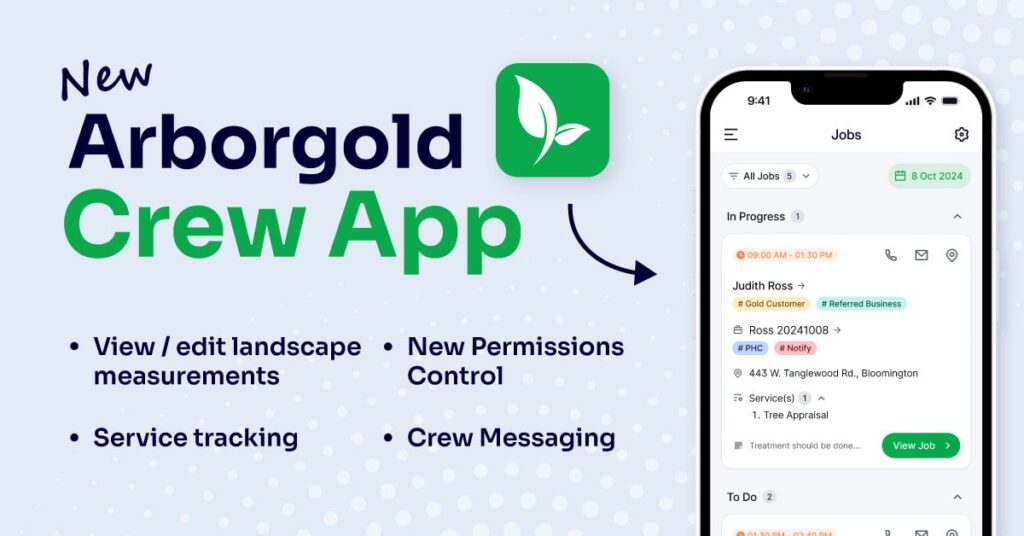
To improve your team’s efficiency and ensure they stay organized, you must empower them with a robust mobile app. This is the critical link that connects field operations with office management.
When your technicians have access to mobile tools, several things happen:
- Digital Forms eliminate paperwork: Accurate data is captured on-site, from material usage to specific client notes.
- Precise Time Management: Employees clock in and out of specific jobs on their phones. This provides accurate data on actual labor costs versus estimated budgets, offering valuable insights into profitability.
- Visual Documentation: Crews can take before-and-after photos, which are crucial for quality control and protecting the business from liability.
By equipping crews with the right technology, you not only save time but also give them the autonomy to run their routes effectively.

4. Standardizing Quality Across Multiple Lawn Care Crews
Technology is incredible, but it doesn’t replace leadership. When you manage multiple teams, your biggest risk is inconsistency. You cannot afford for “Team A” to provide Ritz-Carlton service while “Team C” is cutting corners.
Successful owners focus on creating Standard Operating Procedures (SOPs) that are reinforced by their software. A good mobile app can force a crew lead to check off specific tasks before a job can be marked complete, ensuring consistency across the board.
Furthermore, data from your management software allows you to identify which leaders are running the most profitable routes and which ones need coaching. You can incentivize efficiency based on real metrics, not just gut feelings.
5. How Crew Coordination Impacts Customer Experience
Why does all this backend coordination matter? Because eventually, operational efficiency impacts the customer experience.
In today’s on-demand economy, clients expect transparency. They want to know when you are coming, what you did, and they want an easy way to pay. If your crews are disorganized, your customer communication will suffer, and you will lose business.
By utilizing integrated lawn care software, you can offer features that attract and retain ideal customers, such as:
- Automated Notifications: Sending text or email reminders before a crew arrives.
- Customer Portals: Giving clients a hub to view their service history, request new services, and see upcoming visits.
- Online Payments: The faster you invoice, the faster you get paid. Integrated systems enable employees to complete a job, trigger an invoice, and let customers make online payments instantly. This drastically improves cash flow.
How to Improve Cash Flow with Arborgold’s Invoicing Features
When your operations are smooth, your customers are happier. Happy customers leave better reviews, which is the most effective form of marketing and lead generation to attract new customers.
By The Numbers: The Impact of Coordination
| Metric | Scheduling Time |
| Manual Management | 2–3 Hours / Day |
| Tech-Enabled Management | 15–20 Minutes / Day |
| Metric | Fuel Expenses |
| Manual Management | 100% (Baseline) |
| Tech-Enabled Management | 10–20% Reduction |
| Metric | Invoicing Cycle |
| Manual Management | 7–14 Days |
| Tech-Enabled Management | Same Day |
| Metric | Team Productivity |
| Manual Management | 70% Optimal |
| Tech-Enabled Management | 95%+ Optimal |

The Tools to Scale Your Lawn Care Business
Building a successful lawn care business isn’t about working harder; it’s about building systems that allow your teams to work smarter. If you are still trying to manage landscaping crews using paper, spreadsheets, and excessive phone calls, you are putting a ceiling on your own growth.
By focusing on strategic shift planning, optimizing dispatch workflows, and adopting powerful mobile tools, you can gain control over your operations. Tools like Arborgold’s multi-crew scheduling and dispatch features help growing lawn care companies make these adjustments in real time without manual rescheduling.
Arborgold was designed specifically to handle the complexities of growing lawn care and landscaping companies. From multi-team scheduling software to a powerful mobile app for field staff and customer portals for seamless billing, Arborgold provides the all-in-one platform necessary to coordinate chaos into profitability.
If you are ready to stop drowning in daily logistics and start focusing on growing your business, it’s time to implement the tools that make scaling possible. Schedule a demo with Arborgold today.
Frequently Asked Questions
How do successful lawn care companies manage multiple crews efficiently?
Successful lawn care companies rely on centralized scheduling, clear role assignments, and real-time communication between the office and the field. Using software to manage routes, job details, and daily schedules helps eliminate confusion and ensures every crew knows exactly where they need to be and what needs to be done.
What is the biggest challenge when coordinating multiple landscaping teams?
The biggest challenge is keeping everyone aligned when plans change. Weather delays, equipment issues, and last-minute client requests can quickly derail a day. Companies that use digital scheduling and dispatch tools can adjust routes and assignments instantly without relying on phone calls or paper schedules.
How does crew coordination impact profitability?
Poor coordination leads to wasted drive time, missed jobs, overtime labor, and billing delays. Efficient crew coordination increases daily job capacity, reduces fuel and labor costs, and ensures work is completed and invoiced on time, all of which directly improve profitability.
Do small lawn care businesses need crew management software?
Yes. Even businesses with two or three crews benefit from crew management software. As soon as you’re juggling multiple schedules, vehicles, and job sites, manual systems create inefficiencies. Software helps small teams operate with the structure and efficiency of much larger companies.
How does software improve communication between the office and the field?
Modern lawn care software provides mobile access to schedules, job notes, photos, and updates. Crews can see changes in real time, update job status from the field, and eliminate the need for constant check-in calls, keeping everyone on the same page throughout the day.
Share this resource