Why Landscaping Companies Lose Time Between Jobs

Most landscaping companies do not lose money because crews are incapable of doing the work. They lose money because operational time disappears between jobs.
A crew finishes early and waits for the next assignment. A route sends trucks across town unnecessarily. A property is not ready when the crew arrives. A schedule changes mid-day and nobody in the field sees the update fast enough.
These gaps are easy to overlook because they rarely show up clearly on a profit-and-loss statement. But over time, they create major productivity losses across the business.
As companies grow, these coordination problems compound quickly. More crews, more jobs, larger service areas, and tighter schedules make it increasingly difficult to manage operations manually.
That is why many growing companies move beyond spreadsheets and basic calendars and start looking for landscape business management software and landscape scheduling software that connects scheduling, routing, communication, and job visibility into a single operational system.
Most Lost Time Doesn’t Happen On Jobs — It Happens Between Them
Many owners focus heavily on improving efficiency while crews are actively working on-site. But operational waste often happens before the next job even starts.
Five minutes here. Ten minutes there. Twenty extra minutes of drive time. Crews waiting for instructions. Equipment arriving late. Schedule confusion between the office and the field.
Individually, these delays may seem minor. Across multiple crews, multiple days, and an entire season, they become a significant operational problem.
For growing landscaping businesses, the challenge is rarely effort. The challenge is coordination. Without strong scheduling visibility and operational alignment, productive hours slowly disappear throughout the day.
Why Time Between Jobs Breaks Down As Companies Grow
The scheduling process becomes far more complex once a company manages multiple crews, recurring routes, varying job lengths, and larger geographic territories.
What worked with two crews often breaks down with six. What worked with whiteboards or spreadsheets becomes increasingly difficult once schedules constantly change throughout the day.
Crews Finish Early Or Sit Idle
One of the most common inefficiencies in landscaping operations is idle crew time between jobs.
A crew may finish earlier than expected but have no immediate visibility into what comes next. The office may be unaware the crew is available. Another nearby job may need support, but nobody can coordinate the adjustment quickly enough.
As a result, crews sit idle instead of remaining productive. Over time, these small gaps create major labor inefficiencies that reduce profitability across the organization.
Travel Time Adds Up Quickly
Poor routing and inefficient job sequencing quietly consume hours every week. According to the U.S. Department of Energy’s vehicle idling research, unnecessary driving and idle time can significantly increase fuel consumption and operational costs for service-based businesses.
Without connected scheduling visibility, companies often schedule jobs based on availability instead of geography or route efficiency.
Crews may drive back and forth across service areas unnecessarily. Equipment may need to be relocated multiple times. Traffic conditions and drive times may not be factored into scheduling decisions.
The result is more windshield time and fewer productive labor hours. For many growing companies, reducing travel inefficiencies creates one of the biggest opportunities for operational improvement.
Jobs Don’t Start On Time
Delays between jobs often begin before crews even arrive.
A property may not be ready. Materials may not be staged. Instructions may be incomplete. The customer may not have confirmed access. Crews may arrive without updated job information.
When communication breaks down between the office and the field, schedules quickly become unstable. One delayed start time can impact the rest of the day’s schedule and create cascading inefficiencies across multiple crews.
Last-Minute Changes Disrupt The Day
Landscaping schedules rarely stay static. Weather changes. Emergency work appears. Customers reschedule. Crews finish early. Equipment breaks down.
The problem is not that schedules change. The problem is when businesses lack the operational systems needed to adjust quickly without disrupting the entire day.
Without centralized visibility, reactive scheduling changes create confusion, duplicate communication, and delays throughout the organization.
The Hidden Cost Of These Gaps
Most landscaping companies underestimate how much revenue disappears between jobs. The financial impact goes beyond a single delayed crew or inefficient route.
These operational gaps affect:
- Labor utilization
- Fuel costs
- Daily job capacity
- Overtime
- Customer experience
- Production consistency
- Profit margins
Even small inefficiencies become expensive when multiplied across multiple crews and hundreds of jobs. A company losing only 20 to 30 minutes per crew each day may be losing dozens of productive labor hours every week. That lost capacity directly limits revenue growth.
Why Basic Scheduling Tools Can’t Fix This
Basic calendars and spreadsheets may work for smaller operations, but they typically lack the real-time visibility required to manage growing landscaping businesses effectively.
Most simple scheduling tools cannot provide:
- Real-time crew visibility
- Dynamic route adjustments
- Centralized communication
- Operational coordination across departments
- Live schedule updates for field teams
- Connected workflow management
As schedules become more complex, disconnected tools create operational blind spots.
That is why many growing companies begin investing in software for landscapers that supports scheduling, routing, CRM management, estimating, invoicing, and field communication within a connected operational system.

What Landscaping Companies Need Instead
Growing landscaping businesses need more than a digital calendar. They need operational visibility across the entire workday.
The goal is not simply scheduling jobs. The goal is coordinating crews, routes, communication, and job execution in real time.
Real-Time Scheduling Visibility
Field operations move quickly. Office teams need immediate visibility into where crews are, what jobs are complete, what work is delayed, and what capacity becomes available throughout the day.
With stronger scheduling visibility, landscaping companies can make faster operational decisions and reduce downtime between jobs. This is where modern lawn care scheduling software becomes far more valuable than static scheduling tools.
Better Job Sequencing And Routing
Efficient schedules are not just about fitting jobs onto a calendar. They are about minimizing unnecessary travel and maximizing productive labor time.
Connected scheduling systems help businesses organize jobs more strategically based on location, crew availability, service type, and route efficiency. Reducing drive time creates more capacity without increasing headcount.
Instant Communication Between Office And Field
Operational delays often happen because information moves too slowly. Crews need updated schedules, job notes, property details, and changes immediately. Office staff need visibility into field progress without relying entirely on phone calls and manual check-ins.
Connected communication helps reduce confusion and keeps operations moving throughout the day. Many companies use integrated CRM systems for landscapers to centralize customer information, scheduling updates, and operational coordination.
The Ability To Adjust In Real Time
No landscaping schedule stays perfect all day. Weather, traffic, customer requests, and production variability constantly create changes.
The businesses that manage growth most effectively are often the ones that can adjust schedules quickly without creating operational chaos. Flexible systems allow office teams to respond in real time while keeping crews aligned throughout the day.
Signs Your Business Is Losing Time Between Jobs
Many landscaping companies normalize operational inefficiencies because they happen gradually. The warning signs are often visible long before profitability problems appear.
Crews Frequently Wait For Their Next Assignment
If crews regularly call the office asking what to do next, scheduling visibility is likely breaking down. Consistent idle time often signals coordination problems rather than labor problems.
Routes Feel Inefficient Or Disorganized
If trucks spend excessive time driving between properties or crossing service areas repeatedly, routing inefficiencies may be reducing productivity significantly. Poor sequencing quietly drains productive labor hours every day.
Daily Schedules Change Constantly
Frequent schedule disruptions often indicate that the current operational system lacks flexibility and visibility. As businesses grow, reactive scheduling becomes increasingly difficult to manage manually.
How Better Systems Turn Lost Time Into Productive Hours
Operational efficiency improves when scheduling, routing, communication, and job visibility work together instead of operating separately.
That is why many growing landscaping companies invest in connected landscape business management software rather than relying on disconnected tools.
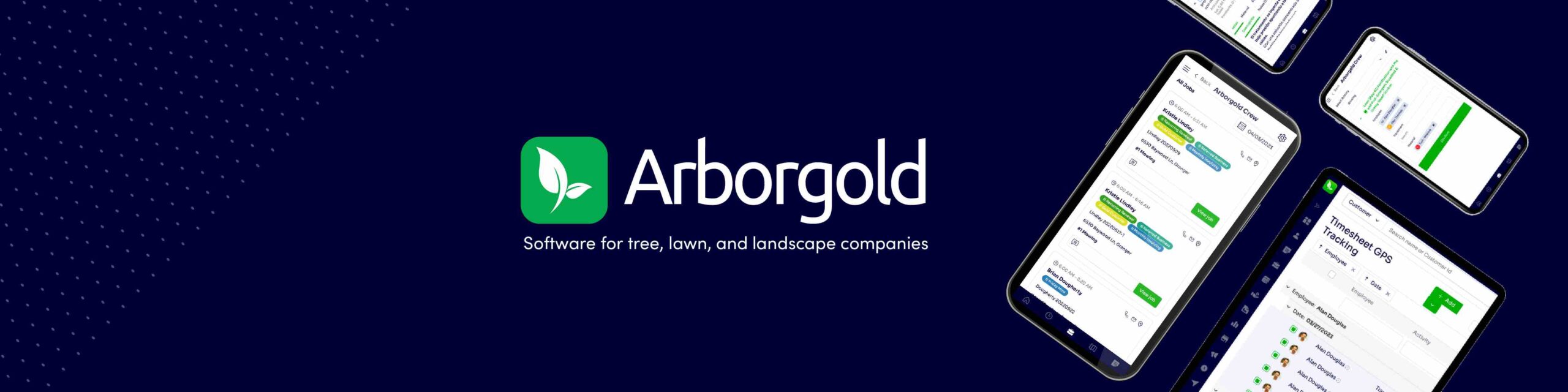
Arborgold helps landscaping companies manage scheduling, routing, CRM workflows, field communication, estimating, invoicing, and operational visibility within a single connected system.
With stronger visibility across daily operations, companies can:
- Reduce downtime between jobs
- Improve route efficiency
- Respond faster to schedule changes
- Increase crew productivity
- Improve operational coordination
- Scale more efficiently as job volume grows
The goal is not simply staying busy.
The goal is reducing the hidden operational gaps that quietly limit growth.

How Arborgold Helps Landscaping Companies Reduce Downtime Between Jobs
As landscaping companies grow, scheduling becomes far more than assigning jobs to a calendar. The real challenge is coordinating crews, routes, communication, equipment, and daily schedule changes without losing productive time between stops.
That is where connected operational systems become critical. Arborgold helps landscaping companies manage scheduling, routing, CRM workflows, estimating, invoicing, and field communication within a single platform built specifically for the green industry.
With stronger operational visibility, Arborgold users can:
- View crew schedules and job progress in real time
- Improve route efficiency and reduce unnecessary drive time
- Quickly adjust schedules when jobs change unexpectedly
- Keep office staff and field crews aligned throughout the day
- Centralize customer, scheduling, and operational information
- Reduce downtime between jobs and improve labor utilization
For growing companies, landscape scheduling software should do more than organize appointments. It should help teams operate more efficiently, recover lost productive hours, and create the operational structure needed to scale profitably.
Frequently Asked Questions About Landscape Scheduling Software
How Does Landscape Scheduling Software Help Reduce Downtime?
Landscape scheduling software helps reduce downtime by improving visibility between crews, schedules, routes, and job progress. Instead of relying on spreadsheets or manual communication, landscaping companies can coordinate schedules in real time and keep crews moving efficiently between jobs.
What Is The Difference Between Basic Scheduling Tools And Landscape Business Management Software?
Basic scheduling tools typically only organize appointments on a calendar. Landscape business management software connects scheduling with CRM workflows, routing, estimating, invoicing, customer management, and field communication so operations stay coordinated as companies grow.
Why Do Landscaping Companies Lose Time Between Jobs?
Most lost time happens because of operational gaps such as inefficient routing, delayed communication, idle crews, schedule confusion, or last-minute changes. As businesses grow, these inefficiencies become harder to manage manually without connected systems.
Share this resource