Is Your Landscape Company Ready for a CRM? 7 Signs It’s Time to Upgrade
You started your landscaping company with spreadsheets, notes, and hustle. That works in the early days. You know every customer. You remember every estimate. You can manage it all in your head.
Then growth happens.
More leads. More crews. More callbacks. More complexity.
At some point, manual systems stop supporting growth and start slowing it down. Many growing companies reach a stage where they need structured systems like landscaping CRM software to manage leads, estimates, scheduling, and customer communication in one place.
The real question is not “Do I need a CRM?”
It is “Am I ready for one?”
Here are seven signs your landscape business may be at that turning point.
What Is a CRM for Landscaping Companies?
A CRM, or customer relationship management system, is software designed to organize and manage customer interactions from first contact through repeat business.
For landscaping companies, a CRM does more than store contact information. A purpose-built CRM for landscaping companies connects your sales pipeline to your field operations. It helps track leads, estimates, job scheduling, invoicing, and customer communication within a centralized system.
If you are evaluating systems and wondering what capabilities modern platforms actually provide, it helps to understand what comprehensive software for landscapers includes and how those tools connect sales, operations, and reporting.
Instead of juggling spreadsheets, text threads, and separate scheduling tools, everything lives in a structured workflow built specifically for service businesses.
When growth increases operational complexity, this visibility becomes critical.
7 Signs Your Landscape Business Is Ready for a CRM
If you are unsure whether your landscape company needs a CRM, look for these signals.
1. You’re Managing Leads in Spreadsheets
Spreadsheets work in the early stages. They are simple and inexpensive.
But they rely on manual entry. They do not automate follow-ups. They do not track where leads sit in your pipeline.
As your marketing increases and lead volume grows, manual tracking becomes risky. A missed call or forgotten follow-up can mean lost revenue.
Spreadsheets lack the automation and structured job tracking capabilities typically built into dedicated CRM software for landscaping companies. When lead management starts consuming too much time or causing missed opportunities, it is a strong indicator you are ready for a more structured system.
2. Follow-Ups Are Falling Through the Cracks
Speed matters in landscaping sales. Customers often contact multiple companies for estimates.
If follow-ups depend on memory or sticky notes, response times slip. Delays reduce close rates.
A CRM system organizes your sales pipeline and helps ensure no lead is forgotten. Automated reminders and pipeline visibility increase accountability and improve conversion rates.
If you are losing jobs because of inconsistent follow-up, growth is outpacing your current system.
3. Scheduling Is Becoming Complicated
When you operate one crew, scheduling is manageable. With multiple crews, job types, and changing timelines, complexity increases quickly.
Double-bookings, miscommunications, and inefficient routing start affecting productivity.
A structured landscape business CRM platform integrates scheduling with sales and job tracking. When scheduling becomes reactive instead of strategic, it often signals the need for centralized software.
4. You Can’t See Your Sales Pipeline Clearly
Do you know:
-
How many open estimates you have?
-
Your current close rate?
-
The total value of jobs in your pipeline?
If the answer requires manual calculation, your visibility is limited.
As revenue grows, pipeline tracking becomes a management function, not a guessing game. A CRM can provide real-time visibility into lead status, revenue projections, and estimator performance.
Growth requires clarity.
5. Estimating and Job Data Live in Separate Systems
If estimating happens in one tool, scheduling in another, and invoicing in a third, your business operates in silos.
Disconnected systems create blind spots. They slow communication between sales and operations. They increase data entry errors.
When your team spends time transferring information between platforms, you are paying for inefficiency.
Centralized CRM software eliminates these disconnects by connecting your workflow from initial inquiry to final invoice.
6. You’re Growing, but Margins Aren’t Improving
Revenue growth does not automatically equal profit growth.
Manual processes increase administrative time. Inefficient scheduling increases labor costs. Poor job tracking hides margin leaks.
Without consistent reporting on job costs, close rates, and production efficiency, it becomes difficult to identify where profitability is slipping. Tracking the landscaping metrics that matter most is essential for sustainable growth.
When performance data lives in spreadsheets or disconnected systems, you lack real-time visibility. Small inefficiencies compound across crews, materials, and production hours.
CRM software helps bring that visibility into one centralized platform. It connects sales, scheduling, and job tracking so you can see not just revenue, but margin performance across your business.
If growth feels busier but not more profitable, your systems may be limiting your margins rather than supporting them.
7. You Want to Scale Without Hiring More Admin Staff
Many landscape companies add administrative staff to manage growth.
But often, the real issue is not headcount. It is process.
CRM software improves workflow efficiency, reduces manual coordination, and increases visibility. Instead of adding more office overhead, you create operational leverage.
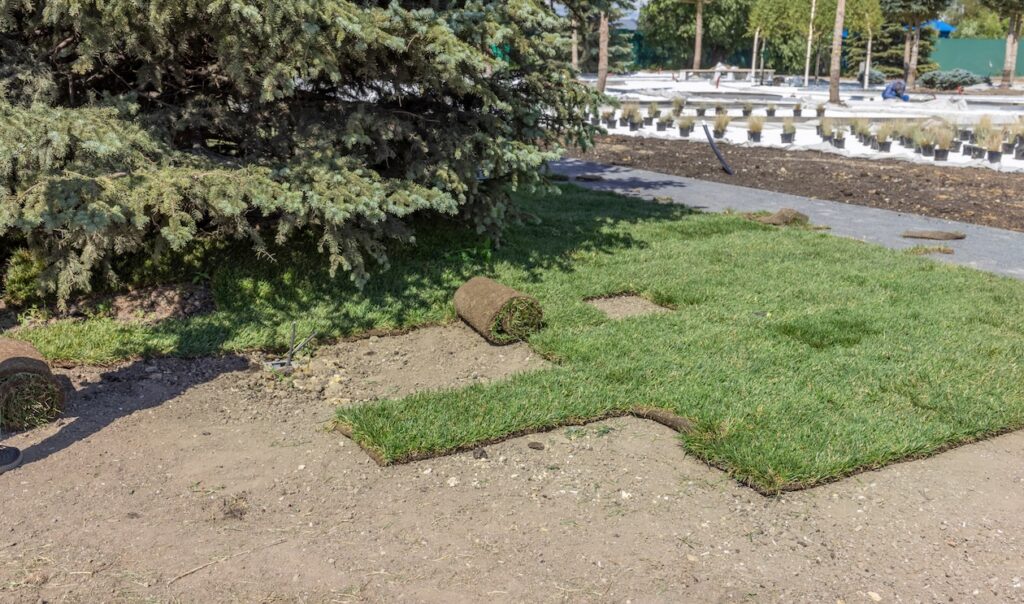
If your growth plan includes expansion, adding crews, or increasing marketing spend, implementing CRM early can support scalable growth.Freshly installed green sod rolls being laid over prepared soil in a residential yard during lawn installation.
Delaying system upgrades has hidden costs.
Missed follow-ups reduce close rates. Manual errors affect billing accuracy. Slow reporting limits decision-making. Operational confusion affects customer experience.
As job volume increases, these inefficiencies scale alongside revenue.
The longer a company waits to centralize systems, the more disruptive the eventual transition becomes. Implementing a CRM during growth is easier than rebuilding operations after inefficiencies compound.
Spreadsheets vs. Landscaping CRM Software
It helps to compare side by side.
Spreadsheets
-
Manual data entry
-
No automated reminders
-
Limited pipeline visibility
-
Disconnected from scheduling
-
Difficult to scale
Landscaping CRM Software
-
Automated workflows
-
Real-time pipeline tracking
-
Integrated scheduling
-
Centralized customer records
-
Reporting on revenue and performance
A dedicated landscape business CRM platform connects estimating, scheduling, invoicing, and reporting in one system. Instead of reacting to problems, you manage proactively.
For companies moving beyond startup mode, this shift changes how the business operates.
When Is the Right Time to Implement CRM Software?
There is no universal revenue number that triggers CRM adoption. However, many companies reach a transition point when:
-
Annual revenue approaches $250,000 to $500,000
-
Multiple crews operate simultaneously
-
A dedicated estimator or sales rep is in place
-
Lead volume is increasing through marketing efforts
-
Administrative work is consuming too much owner time
At this stage, operational complexity increases faster than most owners anticipate.
CRM software becomes less about convenience and more about control.
Ready to Scale? Arborgold’s Landscaping CRM Is Built for Growing Companies
Every landscaping company reaches a stage where growth requires more than spreadsheets and manual coordination. The systems that helped you start the business are not the systems that will help you scale it.
If you recognize several of these signs in your operation, it may be time to move to a purpose-built solution.
Arborgold’s landscaping CRM software is designed specifically for landscape companies that want better visibility, stronger accountability, and scalable processes. From lead tracking and estimating to scheduling, invoicing, and reporting, Arborgold connects your entire workflow in one centralized platform.
Growth should create momentum, not confusion. With the right system in place, your team works from clarity instead of chaos, and your business is positioned to scale with confidence.

Frequently Asked Questions About Landscaping CRM
Below are answers to common questions landscape business owners ask when evaluating whether CRM software is the right next step for their company.
What is a landscaping CRM?
A landscaping CRM is software designed specifically for landscape companies to manage leads, estimates, scheduling, customer communication, and job tracking in one centralized system.
When should a landscaping company switch from spreadsheets?
Most companies outgrow spreadsheets when lead volume increases, multiple crews are active, and manual tracking begins causing missed follow-ups or scheduling errors.
How does CRM software improve profitability?
CRM software improves profitability by increasing lead conversion rates, reducing administrative time, improving job tracking, and providing visibility into margins and performance.
Is CRM only for large landscaping companies?
No. CRM is often most valuable during growth stages, particularly when companies are adding crews or increasing marketing efforts.rketing efforts.tages, particularly when companies are adding crews or increasing marketing efforts.rketing efforts.
Share this resource