Fleet & Equipment Management Tips for Multi-Crew Lawn Care Businesses

Scaling a lawn care business from a single crew to multiple crews is a huge accomplishment, but it introduces a complex logistical challenge: effective fleet equipment management. Efficient lawn care fleet management helps reduce costly breakdowns, improve routing, and boost daily job output across multiple crews.
Suddenly, managing your trucks, trailers, mowers, and specialized tools becomes a full-time job, highlighting the importance of effective equipment management. Losing an expensive aerator or dealing with unexpected downtime from an unmaintained mower can quickly erode profits and damage customer satisfaction.
This guide provides fleet equipment management tips for multi-crew lawn care businesses—a step-by-step guide designed to help you streamline your operations, boost efficiency, and answer the core question: “How to manage fleet effectively?”

Building a Proactive Fleet Management Strategy
Before you can manage your equipment, you need a solid strategy.
Your fleet is more than just a collection of vehicles and equipment; it’s one of your business’s biggest assets, especially for landscape professionals. A proactive strategy focuses on minimizing the total cost of ownership (TCO) while ensuring maximum uptime for your crews.
Centralized Ownership and Responsibility
As a landscaping business, you need a dedicated team member—or at least a defined role—responsible for the entire inventory. This person, whether the owner or a logistics manager, oversees purchases, maintenance schedules, and tool checkouts, ensuring all employees are accountable. Accountability is the key to preventing equipment loss and ensuring proper care.
Lifecycle Planning: Buy, Maintain, Retire
Informed decisions about when to replace equipment are crucial. Don’t wait until a mower breaks down for the fifth time. Develop a clear plan for your assets:
- Buying/Leasing: Should you buy new, used, or consider leasing?
- Replacement: Set hour-meter thresholds (e.g., retire mowers at 1,500 hours) to replace assets before costly repairs begin to mount.
- Rotation: Use newer, more reliable trucks and mowers for high-priority job sites and rotate older equipment to simpler, smaller job locations.

Pillar 1: Mastering Preventive Maintenance (The Cost-Saving Secret)
The most crucial of all fleet equipment management tips for multi-crew lawn care businesses is mastering Preventive Maintenance (PM). This focus on lawn care equipment maintenance, especially during mowing season, is the difference between an industry leader and a company constantly fighting fires.
Implement a Schedule, Not a Reaction
Breakdowns are expensive—not just for the repairs, but for the lost billable hours and delays in service. The goal of routine maintenance is to move from repairing breakdowns to preventing them.
- Hour-Based Scheduling: Instead of relying on monthly checks, base your PM on usage. For commercial mowers, this means scheduling oil changes, filter replacements, and blade sharpening based on run-hours (e.g., every 50, 100, or 200 hours).
- Digital Documentation: Every service, repair, and part needs to be logged. This helps you track warranty coverage, assess the true cost of operating a machine, and make informed decisions about future purchases.
Crew-Level Daily Checks
Empower your crews and team with a simple, quick daily checklist. This should be completed before leaving the yard and after returning.
| ✔️ Pre-Departure Check | ✔️ Post-Return Check |
|---|---|
| ✔️ Fuel/Fluid Levels | ✔️ Cleanliness (clear debris) |
| ✔️ Tire Pressure & Lug Nuts | ✔️ Blade Sharpness & Balance |
| ✔️ Blade Condition | ✔️ Damage Report (nicks, rattles, etc.) |
| ✔️ Safety Features (brakes, lights) | ✔️ Check for Missing Tools |
This small investment of time saves thousands in unexpected downtime on the site.
Pillar 2: Tool Accountability & Logistics
When multiple crews share specialized landscaping crew tools (such as aerators, slit seeders, or stump grinders), logistics can become chaotic. You need clear tool checkouts and streamlined shared equipment logistics.
The Check-In/Check-Out System
For every shared asset, implement a mandatory process. This is the key to preventing loss and boosting accountability among employees.
- Tagging: Assign a unique number or barcode to every piece of valuable equipment.
- Assignment: The tool is signed out to a specific crew leader for a specific date and job. That leader is responsible for its condition until it is signed back in.
- Condition Assessment: Require a brief assessment of the tool’s condition both before and after use.
This ensures that the equipment returns in the same or better condition, ready for the next crew. This provides a massive advantage in reducing replacement costs.
Dedicated Storage and Organization
A highly organized shop and storage area is essential for maximum efficiency.
- Shadow Boards: For smaller tools (trimmers, edgers, hand tools), use shadow boards or outlines on pegboards. If the shadow is empty, the tool is missing.
- Designated Locations: All specialized, shared multi-crew lawn equipment should have a specific parking stall or storage location with clear signage. This eliminates time wasted searching across the yard.
Pillar 3: Maximizing Efficiency with GPS Tracking
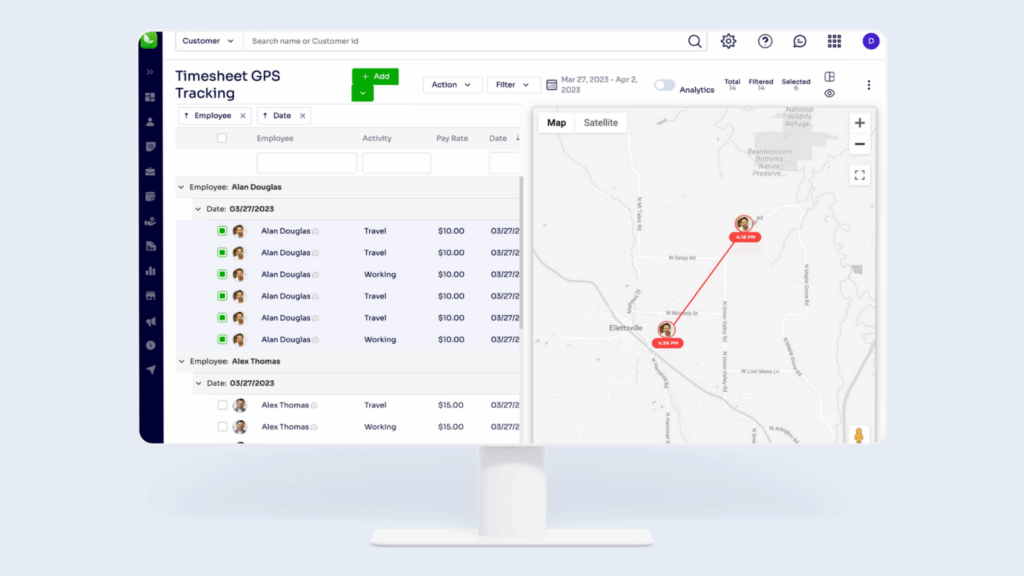
In today’s green industry, GPS tracking software is not an option; it’s a game-changer and an essential component of modern fleet management.
Real-Time Location and Security
Knowing the real-time location of your trucks and trailers offers multiple benefits:
- Theft Protection: Instantly locate and recover stolen high-value assets.
- Dispatching: Quickly find the closest crew to respond to an urgent service call or a new site addition.
- Safety: Monitor driver safety and adherence to planned routes.
Accurate Data for Billing and Maintenance
GPS provides more than just location; it provides data for informed decisions:
- Run-Time Data: Accurately track the engine hours on your mowers and vehicles. This data is the perfect time to schedule precise routine maintenance, leading to better asset longevity.
- Time on Site: Verify the exact time your crews spend at each specific yard to ensure accurate billing and eliminate customer disputes. This is the foundation of personalized service and customer satisfaction.
Optimizing Routes and Resources
Use historical GPS data to optimize your daily routes. By analyzing where your trucks go and how long they spend driving, you can develop more efficiently planned routes that save time and reduce fuel consumption—a direct boost to your bottom line.
The Arborgold Solution for Maximum Efficiency
You now have a robust strategy built on PM, accountability, and tracking. However, managing all this information—thousands of time stamps, repairs, scheduling entries, and inventory lists—in spreadsheets is impossible as you scale. This is where a specialized software partner becomes the perfect fit.
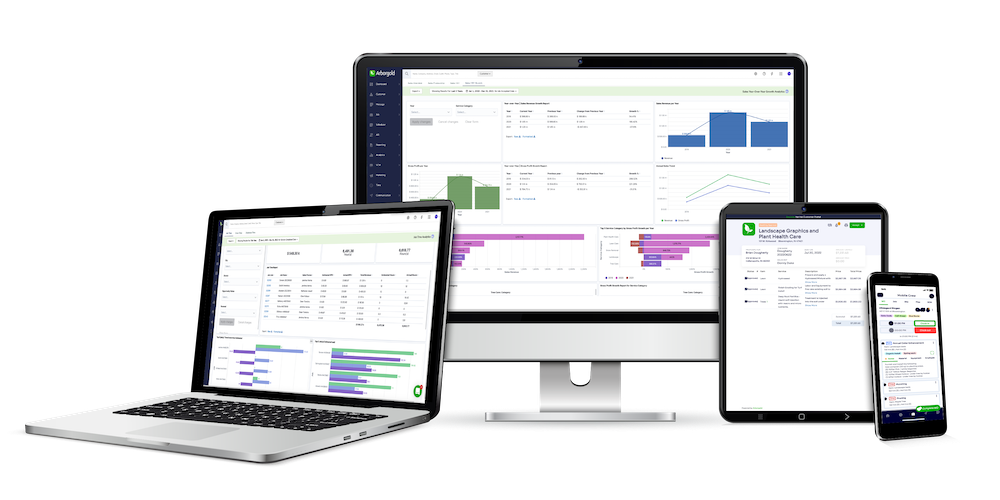
Arborgold Software is an industry leader designed specifically for green industry businesses like yours. It turns your complex management strategy into a seamless, automated process.
- Integrated Fleet Management: Arborgold combines GPS tracking data with your equipment profiles, allowing you to track real-time usage and automatically flag mowers and vehicles for routine maintenance.
- Equipment Checkouts & Inventory: Streamline your shared equipment logistics by digitally managing tool checkouts, serial numbers, and inventory—no more lost tools or guesswork.
- Full-Circle Operations: From initial customer contact and scheduling to invoicing and equipment tracking, Arborgold provides your office and team with the essential resources they need to maximize success.
Stop chasing paperwork and start growing. Discover how Arborgold can enhance your fleet management and streamline your entire lawn care operation. Visit Arborgold or explore their specialized solutions for landscaping companies and lawn care business owners: Arborgold Lawn Care Software.
Driving Profit Through Organization
Effective fleet equipment management tips for multi crew lawn care businesses and landscaping companies boil down to discipline, documentation, and delegation. By focusing on disciplined preventive maintenance, enforcing strict tool checkouts, and utilizing modern technology like GPS tracking, you protect your assets, minimize downtime, and ensure your crews always have the right equipment at the right site.
Your fleet is not an expense—it’s an investment. Manage it efficiently, and it will be your key to sustained success as an industry leader in the green industry.
Frequently Asked Questions
What’s the best way to manage multiple lawn care crews?
Managing multiple lawn care crews successfully requires the right combination of planning, accountability, and technology. Use scheduling software to assign jobs efficiently, GPS tracking to monitor progress and route efficiency, and equipment management tools to ensure every crew has the tools they need. A centralized system for scheduling, routing, and communication helps avoid overlaps, delays, or missed jobs. Arborgold’s software brings these capabilities into one platform, helping businesses coordinate large teams without losing time or money.
How can I prevent equipment loss in a lawn care business?
Tool and equipment loss is common in multi-crew operations, but it’s avoidable. Implement a check-in/check-out system where each tool is assigned to a crew lead at the start of the day and inspected upon return. Use barcode tagging or unique ID numbers to track items, and create a digital log so usage is always documented. For smaller tools, shadow boards help crews instantly recognize if something is missing before they leave the shop. These simple practices save thousands annually in lost or damaged gear.
Why is GPS tracking important for landscaping fleets?
GPS tracking is a powerful tool for reducing operational waste and improving service quality. It lets you monitor your fleet in real-time, which helps in dispatching the closest crew to urgent service calls and minimizing fuel consumption. You can also track route history, time spent at job sites, and vehicle engine hours. This data allows for more accurate billing, proactive maintenance scheduling, and better customer communication. Over time, these insights lead to improved profitability and more efficient day-to-day operations.
Share this resource