What Types of Software Do Landscape Companies Use to Run Their Business?

Landscape companies don’t struggle because they lack tools. They struggle because their operations outgrow the way those tools are used.
In the early stages, a business can run on spreadsheets, text messages, and manual scheduling. But as crews expand, services repeat, and job volume increases, those systems start to break. Information gets lost. Jobs overlap. Margins become harder to track.
At that point, software stops being optional. It becomes the system that holds the business together.
Why Software Becomes Necessary as a Landscape Business Grows
Growth introduces complexity that manual processes cannot handle.
A single crew can be managed with a basic schedule. Multiple crews across different job types create constant coordination pressure. Recurring services add another layer. Estimates, change orders, and billing all begin to overlap.
Without a system in place, common issues start to appear:
-
Missed or delayed jobs
-
Double-booked crews
-
Lost or untracked estimates
-
Inconsistent pricing across jobs
-
Delays in invoicing and cash flow
-
Limited visibility into job profitability
These are not isolated problems. They are symptoms of a business operating without a connected system.
As complexity increases, control becomes the priority. That is where software comes in.
The Complete Software Stack Landscape Companies Use
Landscape companies rely on multiple types of software to manage different parts of their operation. The key is not just having these tools, but how they connect across the full lifecycle of a job.
CRM for Landscapers: Managing Leads and Customer Relationships
Customer relationship management software organizes leads, tracks communication, and stores customer history in one place.
Without a CRM, leads are often tracked across emails, notes, and spreadsheets. Follow-ups get missed. Opportunities fall through.
With a centralized system like a dedicated Arborgold CRM, companies can manage the full customer lifecycle from first contact through ongoing service.
Estimating and Proposal Software: Winning Profitable Work
Estimating software allows companies to build consistent, accurate proposals that reflect real costs.
Manual estimating often leads to underpriced jobs or inconsistent margins, especially when multiple people are creating bids. As volume increases, those inconsistencies compound.
Using structured estimating tools like Arborgold Proposal Estimating Software helps standardize pricing and improve close rates while protecting profitability.
Scheduling Software: Coordinating Crews and Routes
Scheduling is one of the most operationally complex parts of a landscape business.
Recurring maintenance, route density, weather adjustments, and crew availability all have to be managed at once. Manual scheduling systems quickly become unreliable under this pressure.
With dedicated scheduling tools like Arborgold Service Scheduling, companies can coordinate crews efficiently and adjust schedules in real time.
Field and Crew Management Tools: Executing Work in Real Time
Once crews are in the field, visibility becomes critical.
Office teams need to know job status, track time, and communicate updates without relying on calls or texts. Field teams need access to job details, notes, and customer information.
Without this connection, delays and miscommunication increase as the business grows.
Invoicing and Payment Software: Closing the Loop on Revenue
Completing work does not guarantee revenue. Billing delays and missed invoices are common when systems are disconnected.
Integrated invoicing ensures that once work is completed, billing follows immediately. This reduces administrative workload and improves cash flow.
Reporting and Job Costing Software: Protecting Profit Margins
Many landscape companies grow without clear visibility into job profitability.
They know revenue, but not which jobs are actually making money. Labor overruns, inefficient routing, and underpriced work go unnoticed.
Reporting and job costing tools provide insight into performance at the job level, allowing companies to identify where margins are being lost and make adjustments.
The Problem With Using Separate Tools for Each Function
Some companies attempt to solve these problems by using different tools for each function. One platform for CRM, another for scheduling, another for estimating.
This approach creates new problems:
-
Duplicate data entry across systems
-
Inconsistent or outdated information
-
Communication gaps between office and field
-
No single source of truth for job data
As operations scale, these gaps become more expensive.

Why Landscape Companies Move to All-in-One Software Systems
To regain control, many companies transition from disconnected tools to a unified system.
Instead of managing separate platforms, they adopt software that connects the entire operation.
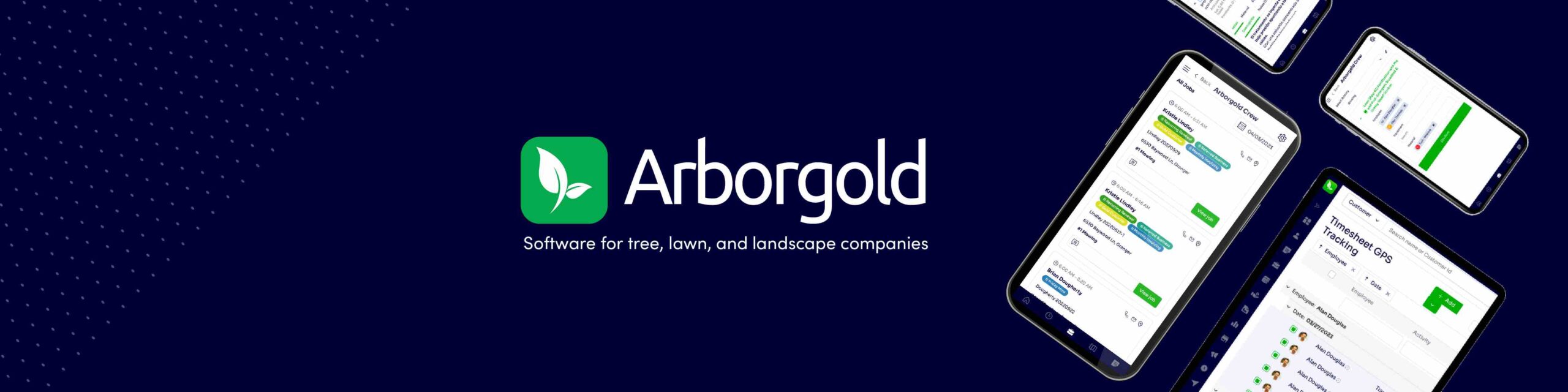
Platforms like Arborgold Landscaping Business Software bring together CRM, estimating, scheduling, invoicing, and reporting into one system.
This shift allows companies to:
-
Eliminate duplicate work
-
Improve communication across teams
-
Maintain accurate, real-time data
-
Scale operations without losing control
How the Right Software Connects the Entire Job Lifecycle
A landscape job moves through multiple stages:
Lead → Estimate → Schedule → Execute → Invoice → Report
When these stages are disconnected, errors and inefficiencies appear at every step.
When they are connected within a single system, the business operates with clarity.
Leads turn into estimates without re-entering data. Schedules reflect real-time availability. Crews execute with full visibility. Invoices are generated immediately. Reporting reflects actual performance.
This is where software stops being a tool and becomes operational infrastructure.
When It’s Time to Upgrade Your Landscape Business Software
There are clear signs that a business has outgrown its current systems:
-
Managing multiple crews across jobs
-
Handling recurring maintenance contracts
-
Experiencing scheduling conflicts or delays
-
Losing visibility into job performance
-
Spending excessive time on administrative work
At this stage, software is no longer a convenience. It is required to maintain control and continue growing.
Software Needs Vary by Service Type
Different types of landscape companies have different operational demands.
Maintenance-focused businesses require strong scheduling and route optimization. Design-build companies rely heavily on estimating and project tracking. Tree care companies need visibility into job progress, crew coordination, and specialized workflows.
Systems built for the green industry, such as Arborgold Tree Care Software, are designed to support these variations.
Choosing Landscape Business Software That Supports Growth
The goal is not to find the tool with the most features. It is to find a system that aligns with how the business operates.
Key considerations include:
-
Whether the software connects the full job lifecycle
-
How well it supports multi-crew coordination
-
Its ability to handle recurring services
-
Visibility into job costing and profitability
-
Ease of use for both office and field teams
The right system reduces friction across the business rather than adding more complexity.
Software Is the Backbone of a Scalable Landscape Business
Landscape companies do not adopt software because they want to. They adopt it because growth demands it.
As operations expand, complexity increases. Without a system in place, that complexity turns into lost time, missed opportunities, and shrinking margins.
With the right software, that same complexity becomes manageable.
The companies that scale successfully are the ones that replace disconnected tools with systems built to support how their business actually operates.
FAQ
What is landscape business software?
Landscape business software is a system that helps companies manage estimating, scheduling, customer data, billing, and operations in one platform.
What software do landscapers need to run their business?
Most growing companies need CRM, estimating, scheduling, invoicing, and reporting tools to manage the full job lifecycle.
Do landscapers need a CRM?
Yes. CRM software helps track leads, manage customer relationships, and ensure follow-ups are completed.
What is the best software for landscapers?
The best software is one that connects the full job lifecycle instead of relying on separate tools for each function.
When should a landscaping company invest in software?
Companies should invest in software when they begin managing multiple crews, recurring services, or experiencing operational breakdowns.
Share this resource